All projectsCase study Our own product
LinguaLive.
The speaker talks and every listener reads the talk on their own phone, in their own language, sentence by sentence. From the same phone they can ask, speak, vote and say how it went. No app and no headset.
- For
- Seminars, courses, conferences and public meetings
- What we did
- Research, design and development
- Status
- Public demo, since November 2026
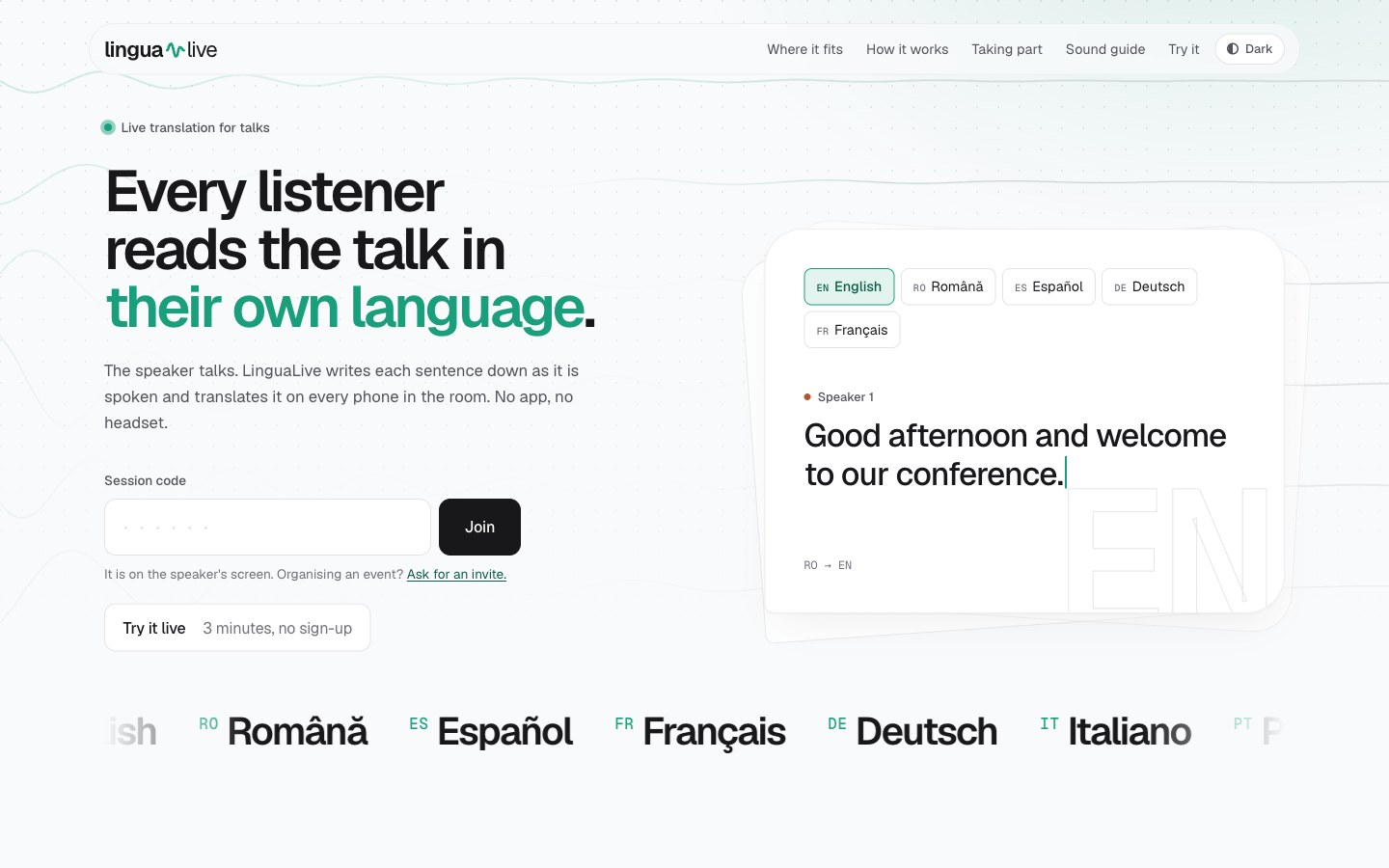
How it works.
The invite
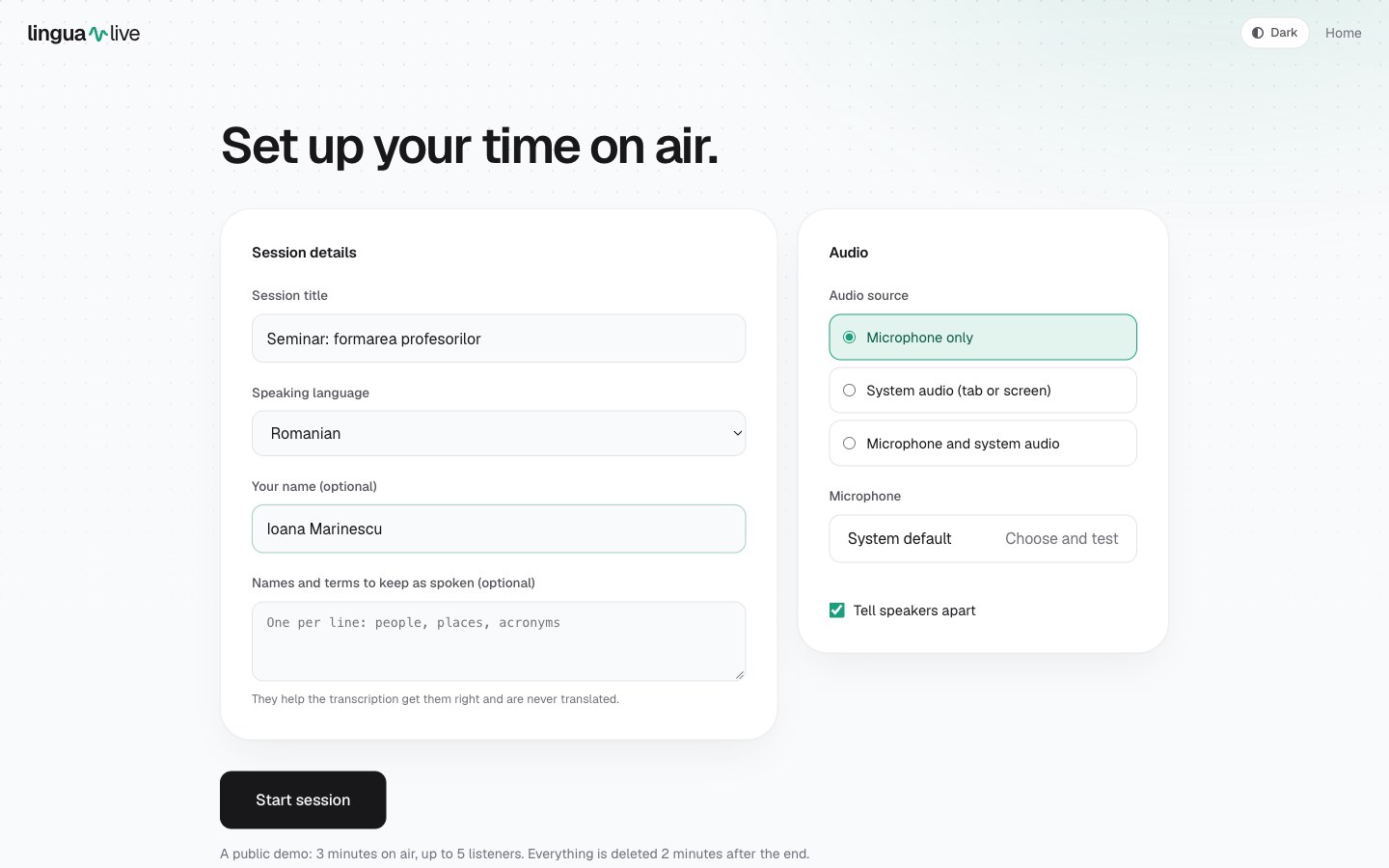
The organiser receives a link for a session of 10 to 90 minutes. They choose the spoken language and add up to 40 names and terms that must not be mangled.
The code
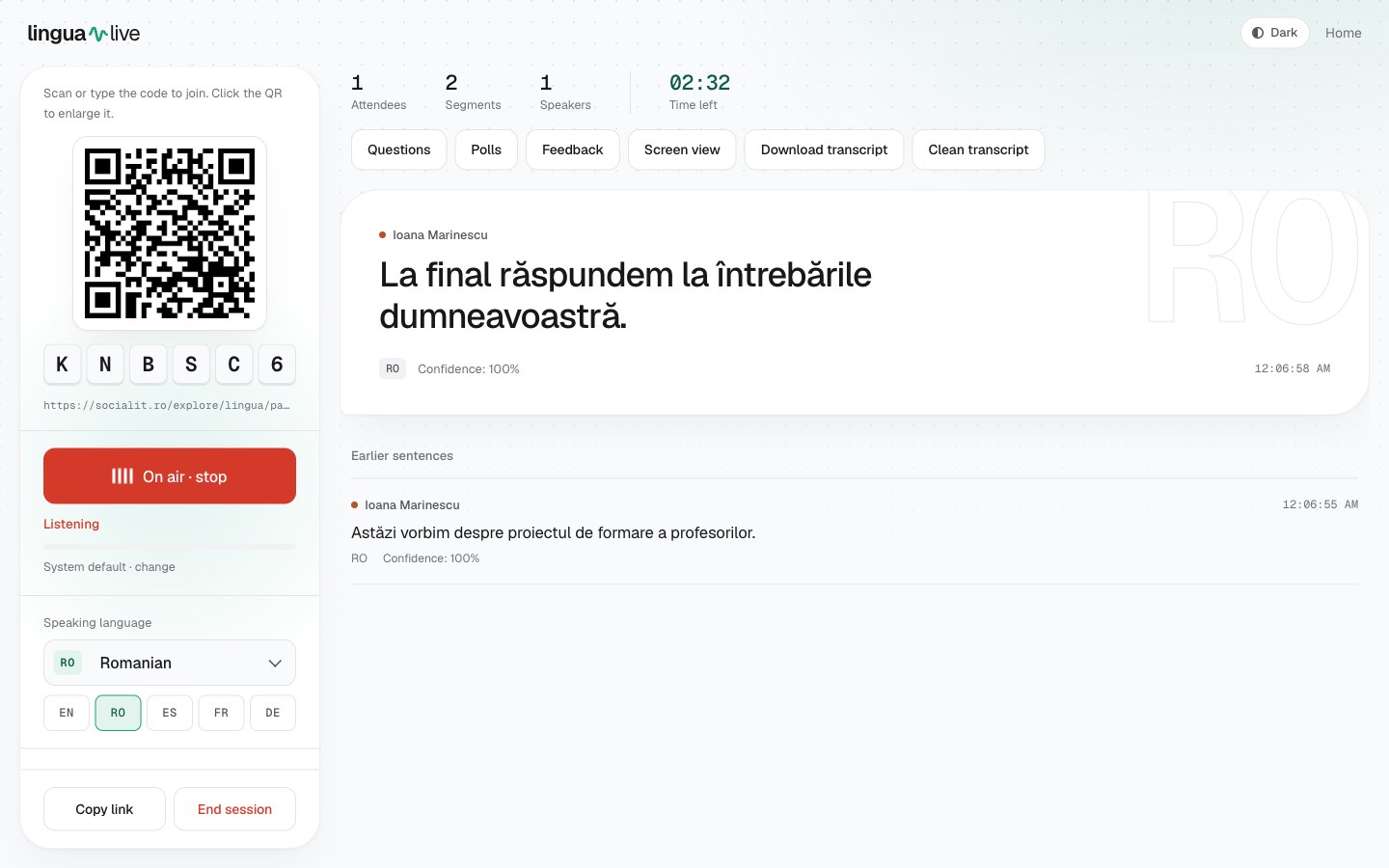
A six-character code or a QR code, on a slide or on the projection screen.
Speaking
Each sentence appears while it is spoken, then settles into its final form.
A second read
A few seconds later, an AI reviser mends the punctuation and the misheard names. A word it adds is marked.
15 languages
Each listener picks their language and can change it at any time. The names on the list are not translated.
At the end
The transcript can be downloaded, as heard or in clean paragraphs. After 15 minutes it is deleted from the server.
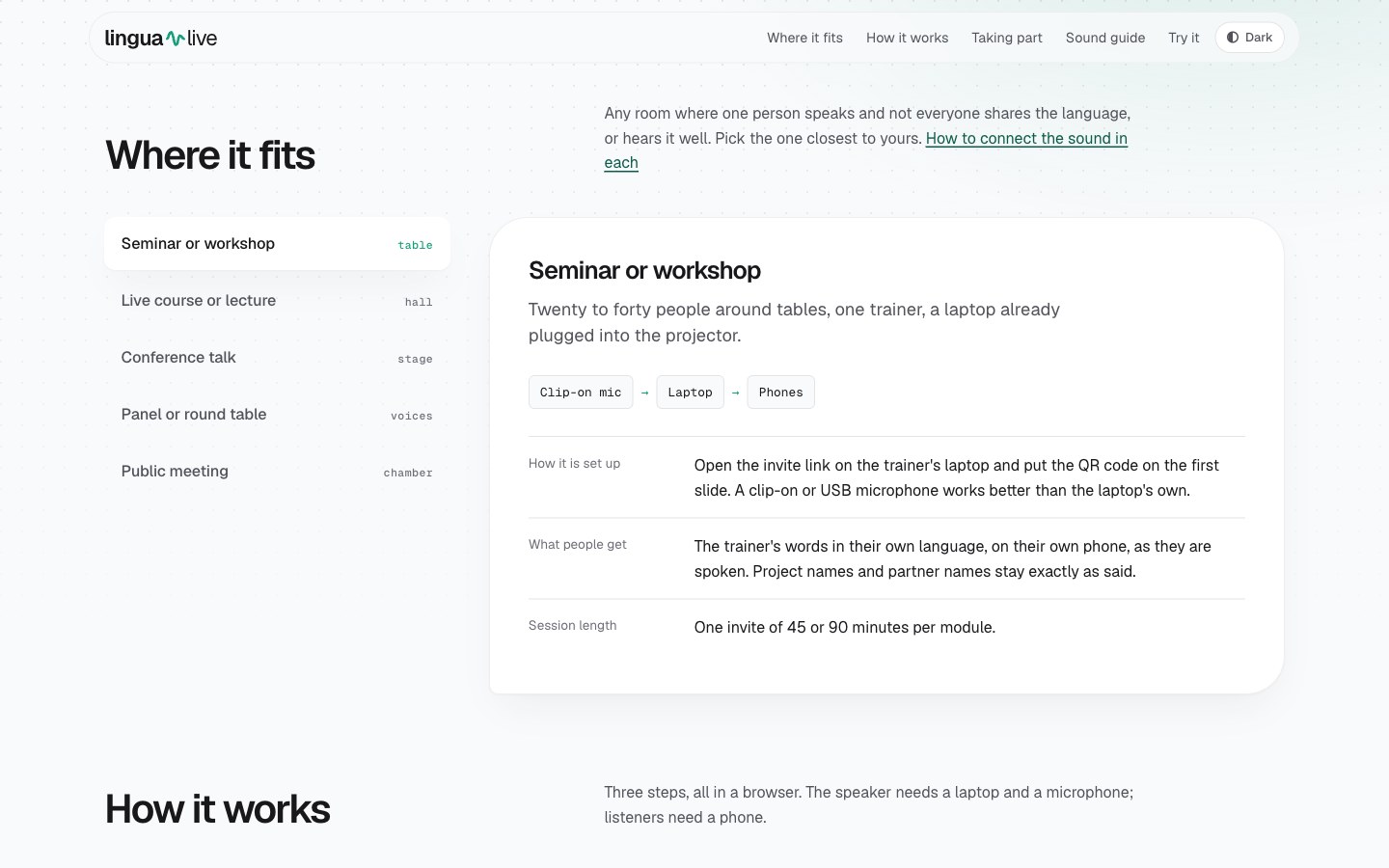
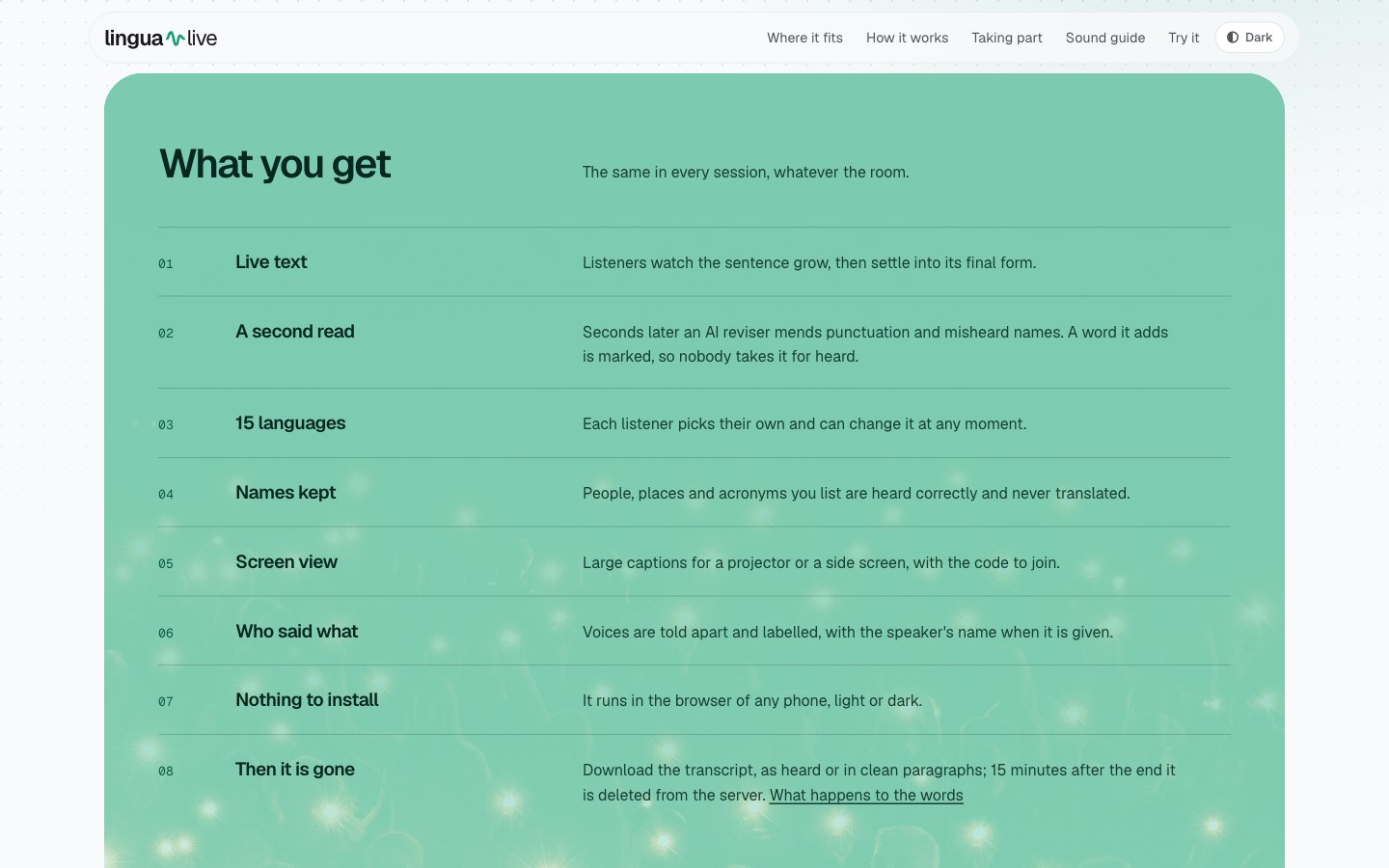
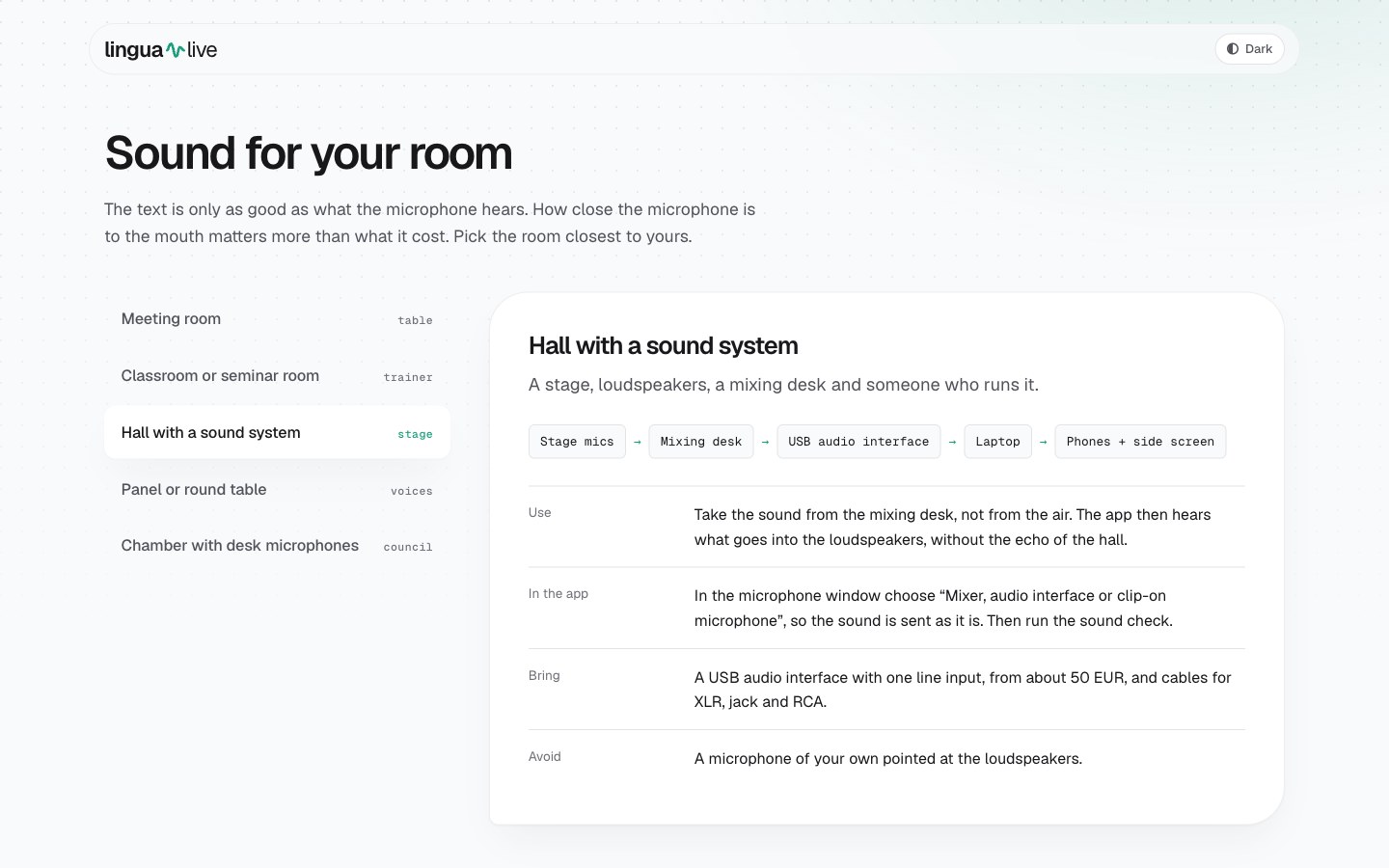
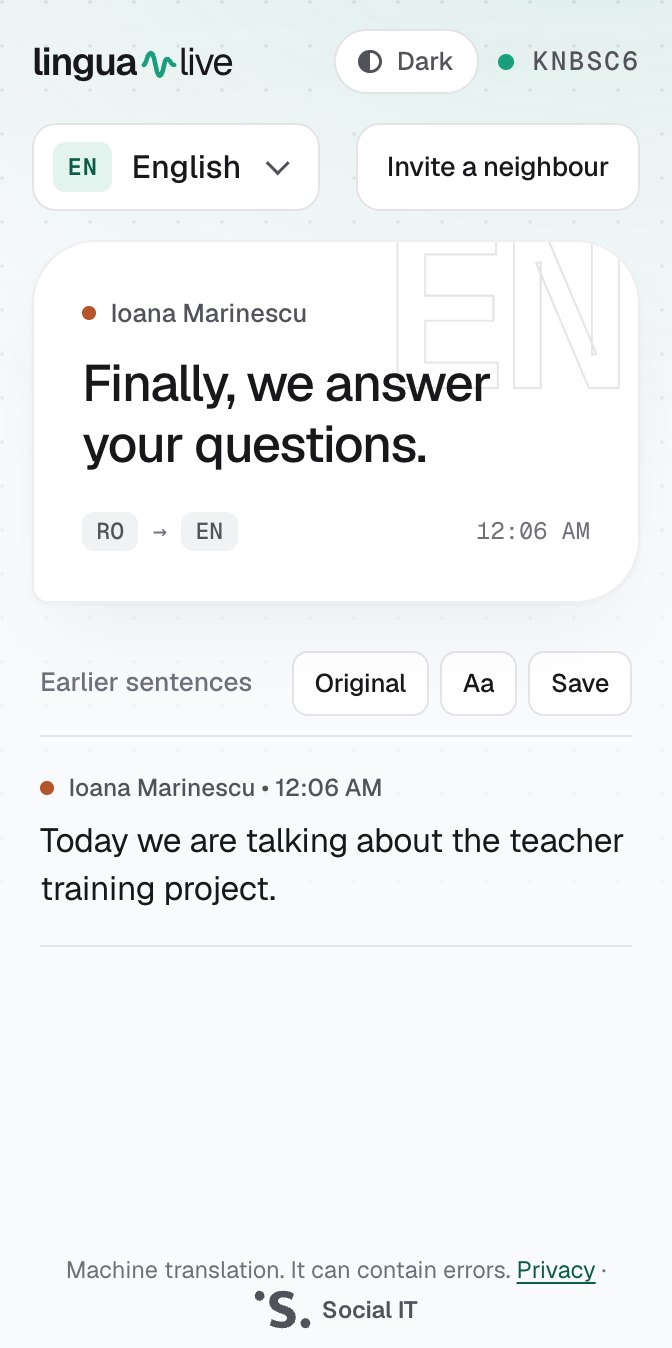
On the listener's phone.
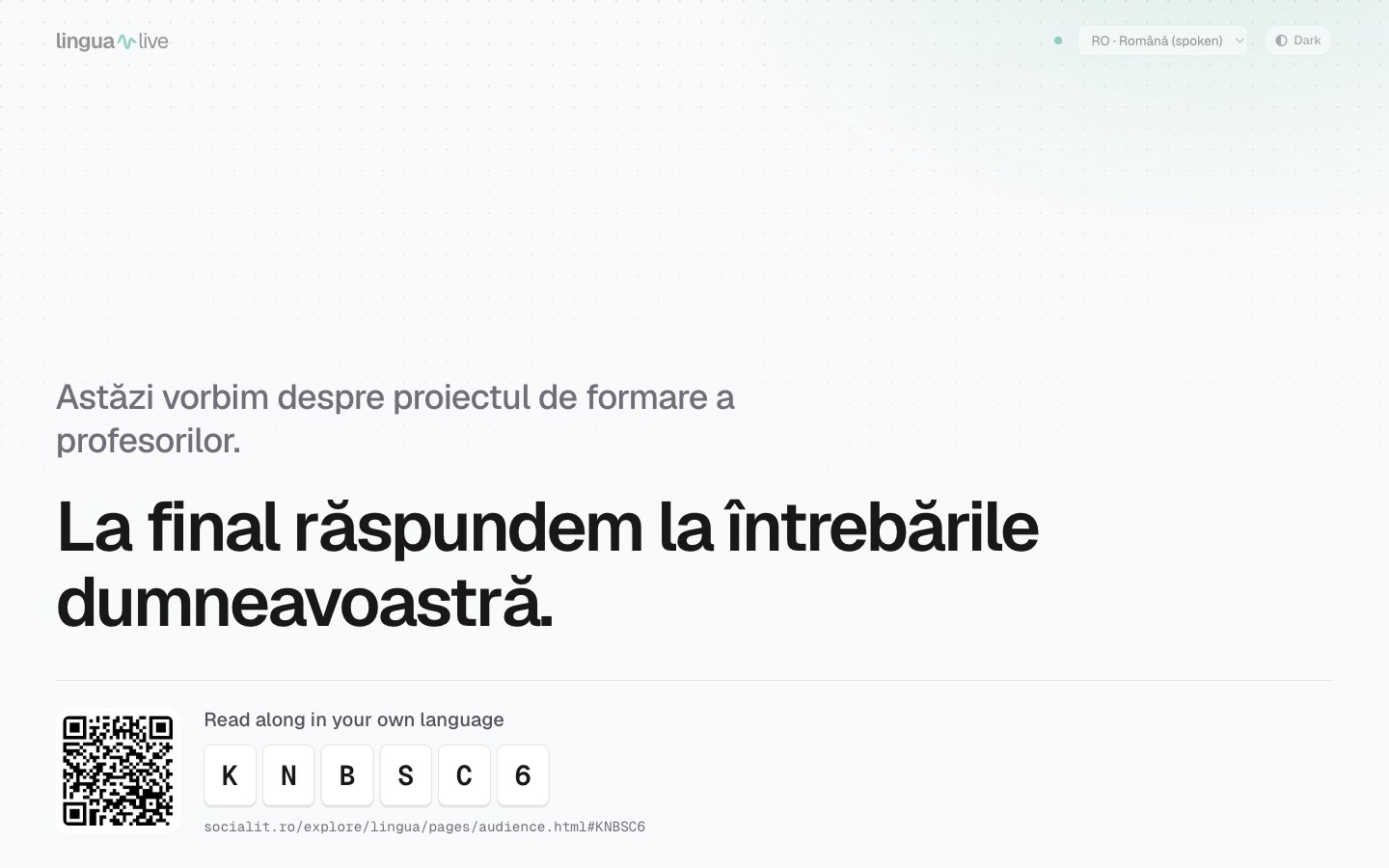
The listener scans the QR code or types the six-character code. They install nothing and create no account.
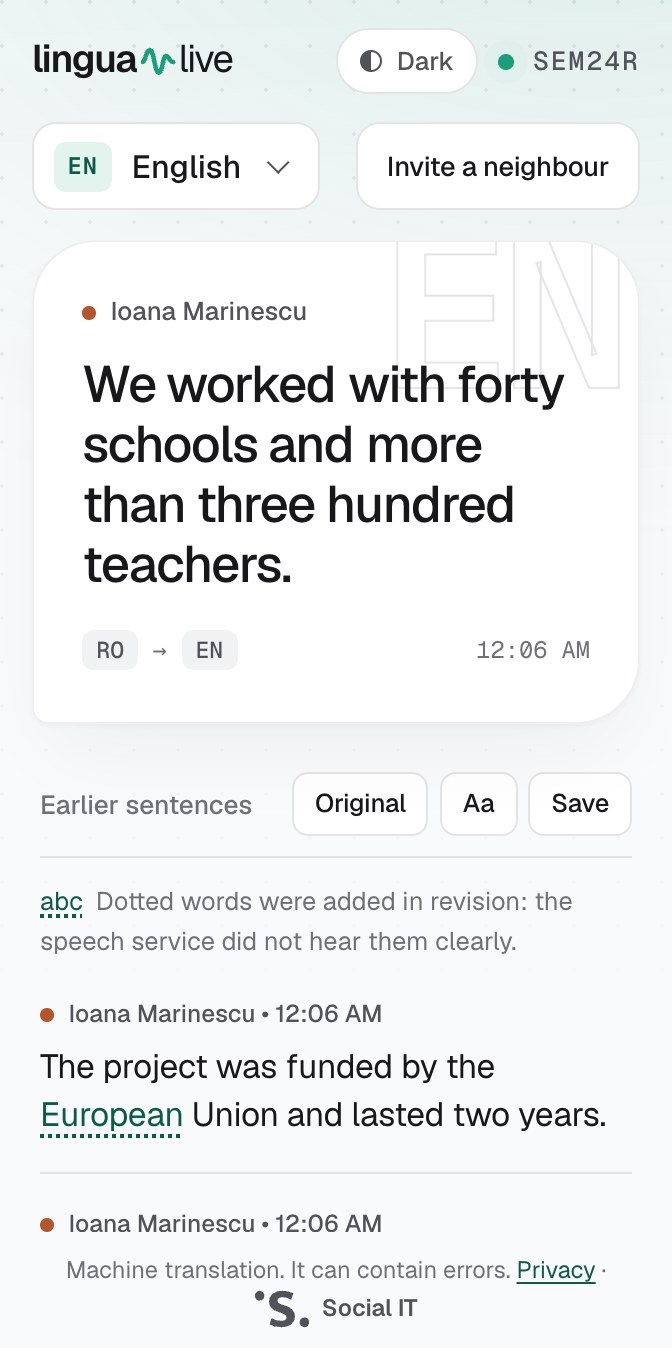
They pick one of the 15 languages and can change it at any time. The current sentence sits at the top, large, and the earlier ones below.
Three buttons show the original, enlarge the letters and save the text. Words added by the reviser appear with a dotted underline, with an explanation.
The room answers back.
On the same code, people in the room can ask, speak, vote and say how it went. The moderator decides when.
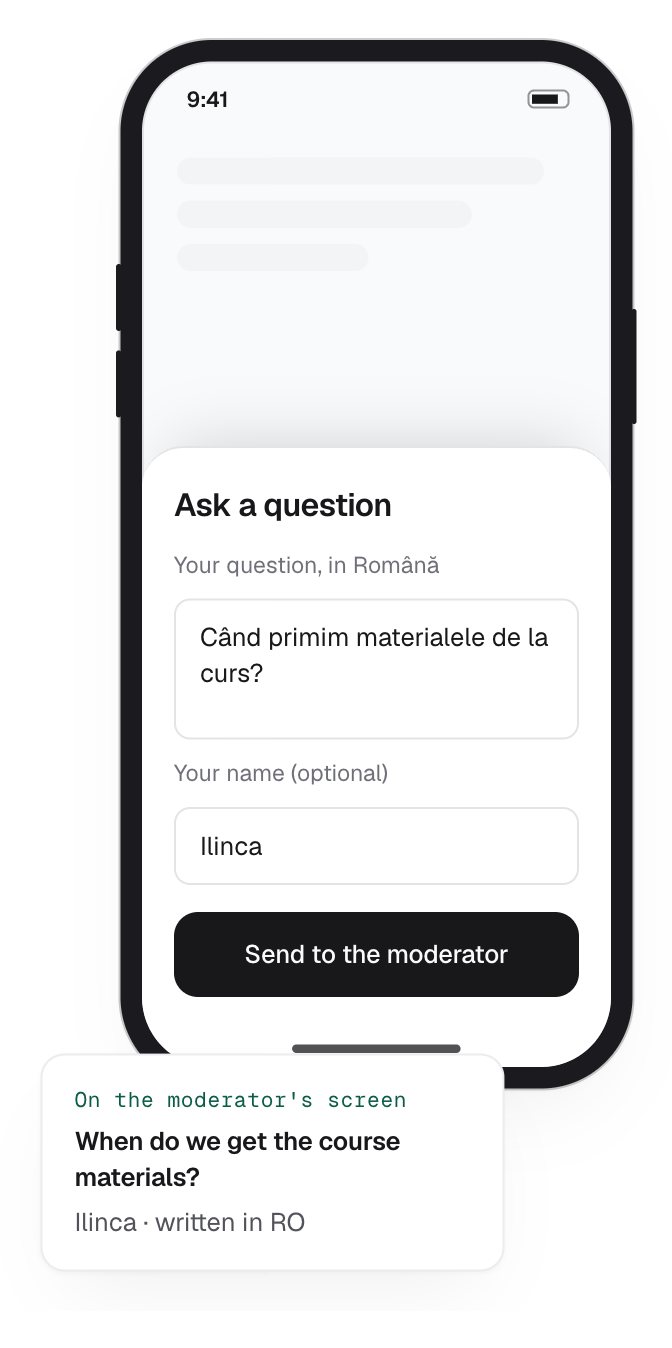
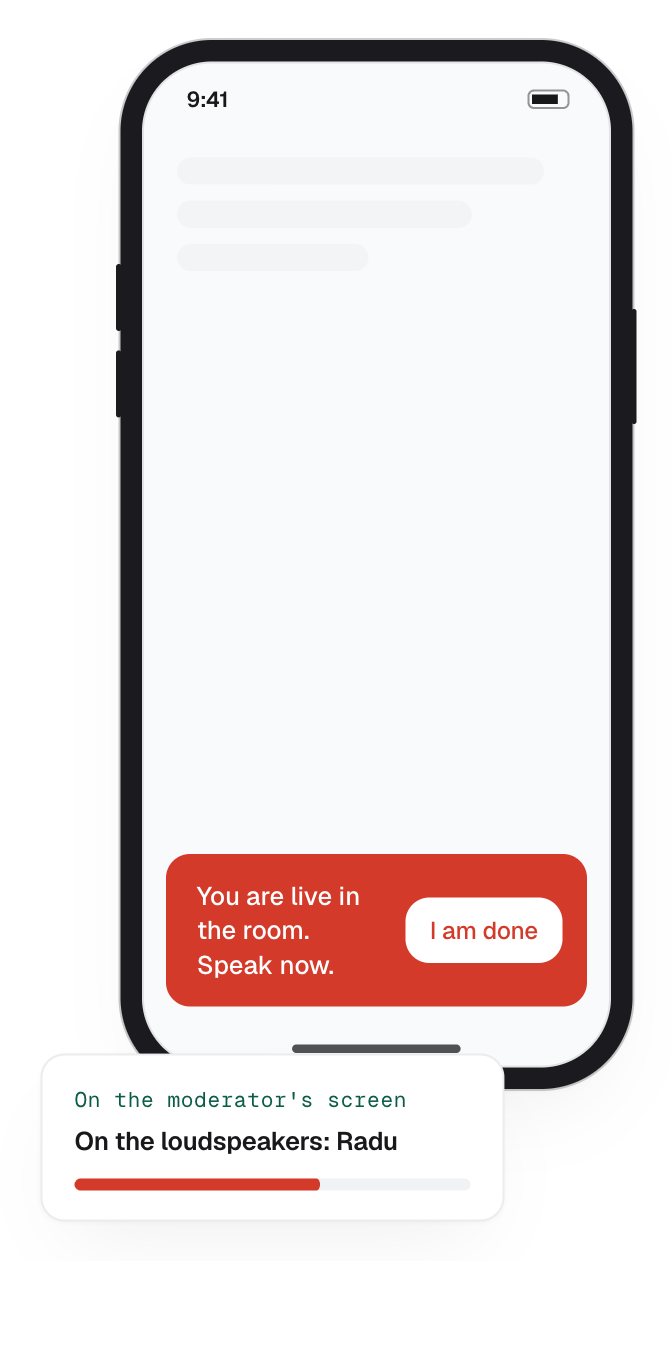
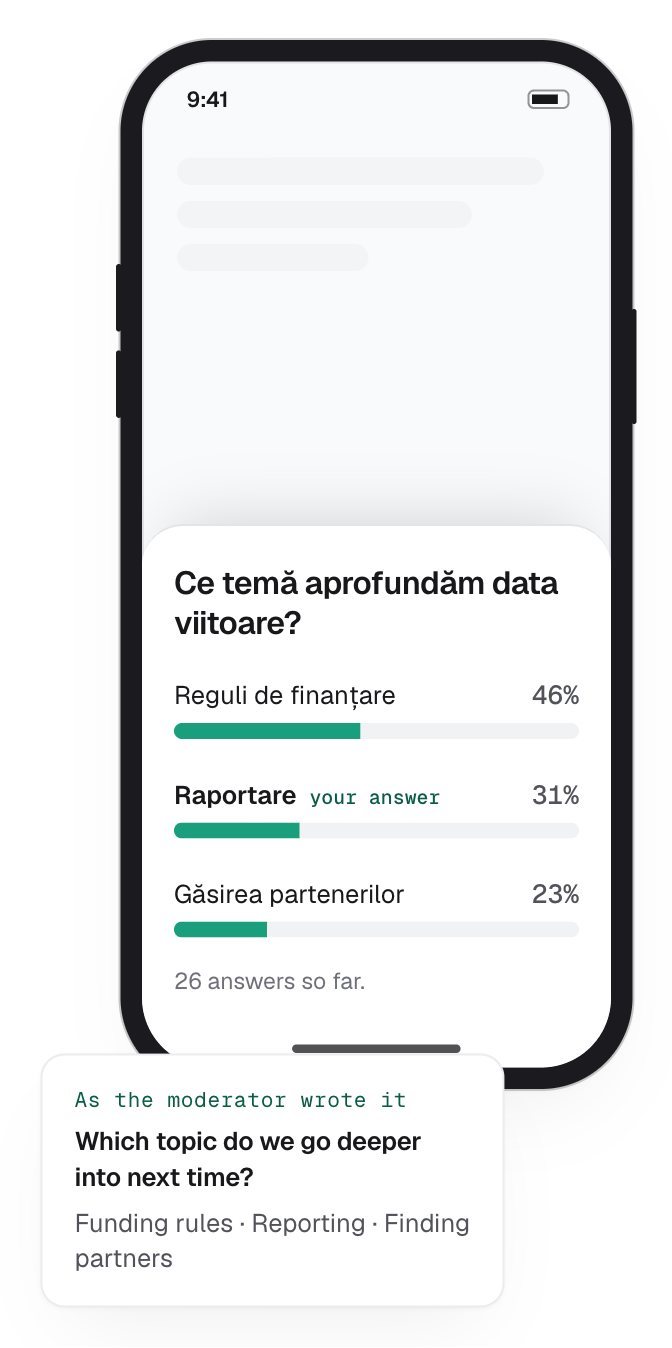
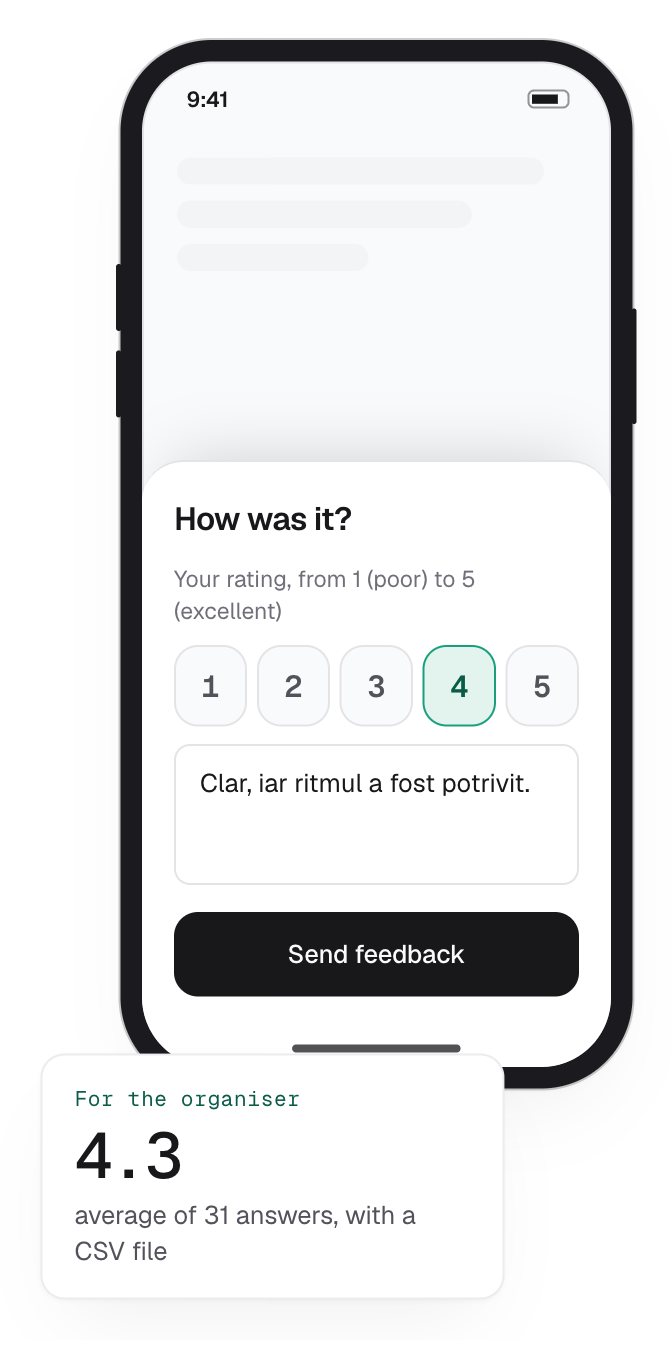
The four phones are the mock-ups from the public page, with sample data.
Technical decisions.
Sessions that disappear
An invite starts a single session, of a fixed length. Fifteen minutes after the end, the session, the transcript and the translations are deleted from the server.
Whole sentences
A sentence is closed only at a real pause after a full stop or when it grows too long, so that a breath does not split it in two.
A reviser in two steps
The text appears at once. A few seconds later, a Claude model corrects it, with the last three sentences as context. The words it adds are marked.
The sound does not pass through our server
The speaker's microphone goes from the browser straight to the speech-to-text service. In the public demo, the browser only receives a short-lived key.
A live voice, not a recording
When a listener is given the floor, the sound goes straight from the phone to the speaker's laptop. It is not recorded.
No account and no database
Everything runs in the browser. The server is plain PHP: a session is a set of files that get deleted.
What stays private.
The sound is not kept
It goes to Deepgram, which turns it into text. We do not record it and we do not store it.
The text is deleted
It stays on the server for as long as the session runs and 15 minutes more. In the public demo, two minutes.
Listeners have no account
They give no name and no email. We only count how many browsers joined a session.
Only the moderator sees the questions
The name is optional. Questions are deleted with the session.
Polls and feedback with no name
A vote is stored next to a random number, not next to a name. Feedback is anonymous.
What reaches others
Deepgram receives the sound, Google Cloud Translation the sentences to translate, and Anthropic the sentences to correct. These services may run outside the European Union.
Status.
LinguaLive has had a public demo since November 2026: three minutes of speaking, up to five phones reading along, and everything is deleted two minutes after the end. A real event starts from an invite link, which we send on request. It has not yet been used in a room, with an audience. The interface is in English.
What it does not do: it does not speak, listeners read. The translation is automatic and gets things wrong, most often the names it was not given. It needs the internet and a microphone close to the speaker.
Write to us.
Do you have a procedure that would run more easily in an app? Tell us in a few lines what you want to solve. You do not need a prepared document. We will then set up a first conversation.
contact@socialit.ro